December 17, 2025
Hormones and Hellfire Ep. 3: What Really Happens in Pelvic Floor Physical Therapy
Many women deal with issues like urinary incontinence, painful intercourse, or postpartum recovery — but don't know that pelvic floor physical therapy could be life-changing. As OB/GYNs, we refer patients to pelvic PT all the time, but we wanted to dive deeper into what actually happens during treatment and why it's so important.
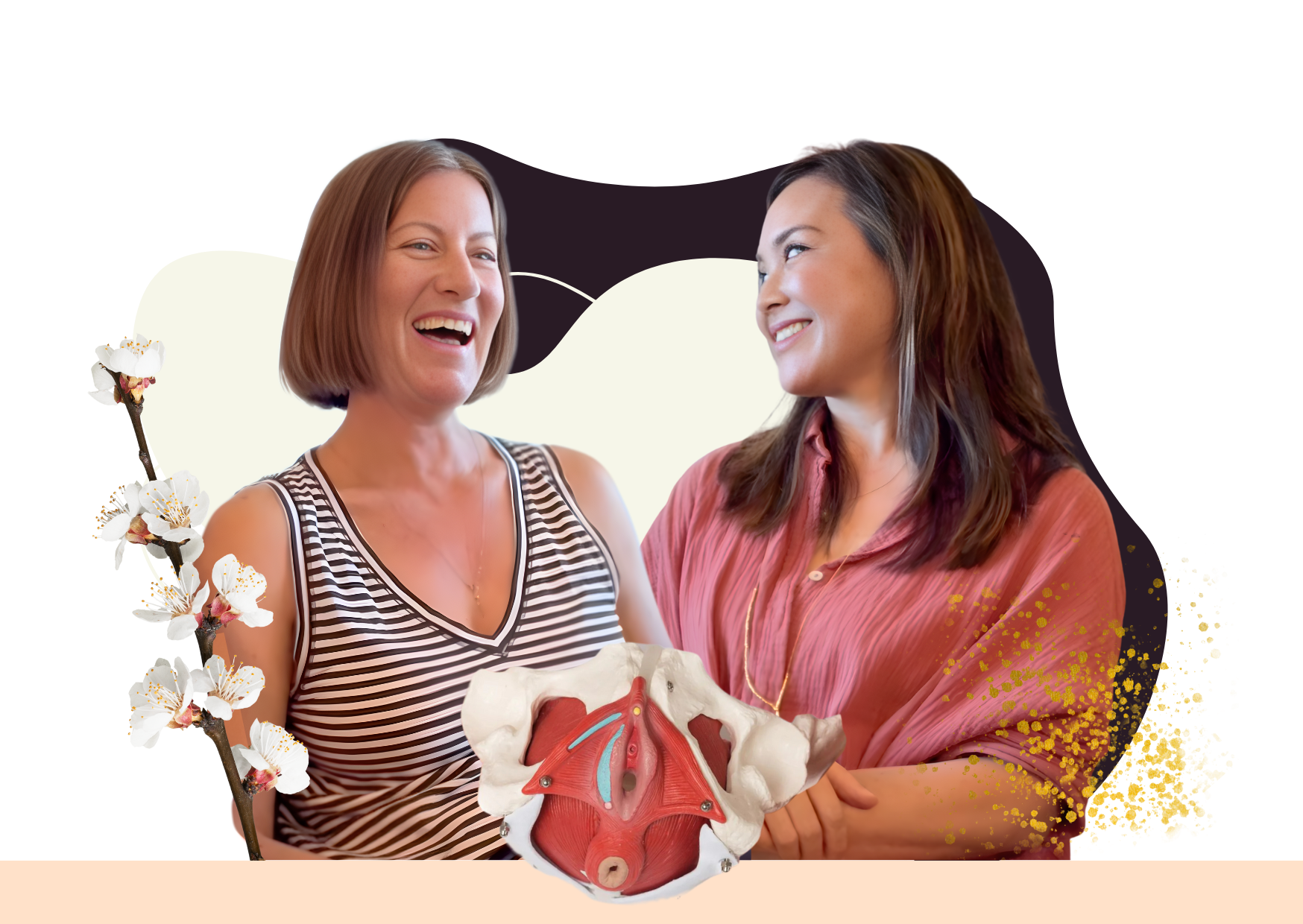
In our latest episode at Hormones and Hellfire, we sit down with two expert pelvic floor physical therapists: Dr. Julie Enomoto from Holomua Physical Therapy and Dr. Lindsey Yorimoto from Enso Physical Therapy. They break down everything you need to know about pelvic PT: from what to expect at your first appointment to how it can help you avoid surgery.
Keep reading for a summary of the three main lessons our PTs shared, or scroll to the end to find links to the full episode (and the full transcript if you prefer reading!)
Three Key Takeaways from Our Conversation
1. Pelvic Floor PT Treats Way More Than You Think
One of the biggest misconceptions about pelvic floor physical therapy is that it's only for postpartum women or people with incontinence. But the reality is that pelvic floor PTs treat a remarkably wide range of conditions.
"The pelvic floor muscles have four functions: helping with bowel and bladder control, supporting your organs, sexual function, and core stabilization. If there's dysfunction in any of those categories, PT might be helpful."
This means pelvic floor PT can help with incontinence (both stress and urge), prolapse symptoms, painful intercourse, back pain, constipation, and even endometriosis symptoms… The list is endless!
Pelvic PTs receive referrals from urologists, colorectal surgeons, gynecologists, and even dermatologists. The key is understanding that the pelvic floor doesn't work in isolation — it's part of your entire core system, which is connected to your breath, posture and overall musculoskeletal health.
2. Your First Appointment is About Education, Not Just Examination
If you're nervous about your first pelvic floor PT appointment, here's what actually happens: there’s a lot of talking first!
"I really start with just talking about the anatomy. I think if a patient has a sound understanding of why they're being seen by a physical therapist and what muscles we're talking about, there's a greater understanding of why they're feeling a certain way."
Your PT will spend time explaining the anatomy of your pelvic floor, how it connects to your diaphragm and core, and what might be causing your symptoms. While an internal assessment may be part of the evaluation, it's not always necessary on day one, especially if there's a complex medical history to unpack. Sessions typically last an hour, and you'll likely leave with homework like posture adjustments or breathing exercises. The standard treatment plan is around 6-8 weekly sessions, though this varies based on individual needs.
3. PT Can Help You Before and After Surgery (and Sometimes Prevent It)
One of the most common questions patients ask is whether pelvic floor PT can help them avoid surgery for conditions like prolapse or incontinence. Here’s what our guests say:
"Whether or not you get surgery, you're going to want to be able to manage your muscles and support the surgery as much as possible. If we work on your inner core canister, managing that pressure, getting your muscles strong... you're going to have a better outcome post-op."
The truth is that PT can't guarantee you'll avoid surgery, However, PT before surgery prepares your body for the best possible outcome, and for maintaining results after surgery. This is especially true for prolapse surgeries, where learning proper pressure management and body mechanics can make the difference between long-term success and recurrence.
Even if you're not sure about surgery yet, starting PT gives you better control over your symptoms while you make that decision.
Finding a Pelvic Floor PT
Looking for a qualified pelvic floor physical therapist in your area? Check out pelvicglobal.com for a directory of providers who have completed specialized coursework in pelvic floor rehabilitation.
Listen to the Full Episode
Watch Episode 3 on YouTube | Listen to Episode 3 on Spotify
Read the Full Transcript Below
What conditions do pelvic floor physical therapists treat? 02:01
Teresa: What sort of conditions do you guys treat? We always put the referral in for everything, but what sort of conditions can patients expect help with? I bet you can tell me because I'm sure that you guys do lots of stuff.
Julie: If I can frame it in this way… So the pelvic floor muscle is a muscle that has functions like any other muscle in the body. If you're familiar with the functions of the pelvic floor, if there are dysfunctions with those categories, and I will tell you what they are, but if there's dysfunction in those categories, maybe PT might be helpful.
So the pelvic floor muscles, their four functions are: helping with bowel and bladder control — and that's including releasing. So not just holding urine or feces, but also being able to defecate well and urinate well. Or completely, I should say.
And then secondly, the pelvic floor muscles help to support your organs. So if there's a prolapse concern, that is something PT can help with or help prevent it from getting worse. Or if there's a possible bulging type injury, that's something we can help patients with as well.
Then, the third is sexual function. So any type of the arousal response cycle that patients might be having difficulty with, whether it's arousal or penetration or post-coital symptoms, anything that has to do with the sexual arousal cycle PT can hopefully influence in some way.
And then the fourth is core stabilization. So if they're having back pain, coccyx pain, any type of pelvic pain — even sometimes if it's too close to the hip and it's not getting better or their hip injury is not getting better. I used to do a lot of orthopedic and some pelvic floor, and now I'm doing a lot more pelvic floor rehabilitation and some orthopedic. I'm so grateful for the orthopedic background that I had because I used to think it was very separate, but I really treat pelvic floor rehabilitation as I would any orthopedic patient because it's a musculoskeletal system that we're working with.
So yes, absolutely. Back pain, whether it's with pregnancy or even if they're having chronic pelvic pain, it's very difficult because the whole area becomes diffused with pain just by the nature of having chronic pain. So maybe the source of their pain is still being addressed medically, however physical therapy can help maybe with some of the adjunct muscles that are being painful and adding to the presentation that they're having.
We get referrals from urologists, colorectal surgeons, PCPs, gynecologists — even dermatologists.
Teresa: Really?
Julie: Because some of the patients are having skin issues related to their incontinence. so they'll be referred. Anything with those functions — bowel and bladder control, pelvic floor, pelvic support, core stabilization or sexual functions.
Lindsey: Yeah, just going off of what you said, it really goes beyond the pelvis. I mean, you see someone being referred in for symptoms secondary to endometriosis. I have a patient where she was complaining of a lot of her urgency and she's a full-time student. And we talked a little bit about, show me how you sit. And we're studying mostly like this the majority of the time. And I'm like, OK, let's play around with that. I want you to 75 % of the time to sit like this or this, let's try that. And she came back and she said: No, you're right. My urgency is way better when I sit better.
Teresa: Who knew college kids could sit like that for long?
Lindsey: It's so great because we didn't do that. I mean, it's not easy to fix posture, but it's amazing. It just goes beyond the pelvic floor. I mean, you could get into it and say “okay, what happens to the public floor when you sit this way versus this way?”. But the fact is that we’re looking at the big picture, and it's not just “are your pelvic muscles weak or strong or tight or not active enough?”. And so we can really make a difference in giving patients the understanding of “oh, I have some control over what's happening here”, I think that’s just so awesome because now it's like “okay, so I see the value in sitting this way versus this way”.
What happens during your first pelvic floor PT appointment? 07:04
Teresa: Okay, so what's the patient going to expect when they see you for the first time?
Julie: For me, when I do an initial evaluation, I really start with just talking about the anatomy.
Diana: I do get asked, what should they wear to an appointment?
Lindsey: I get that question all the time.
Julie: That's a good question. I usually just say wear what's comfortable. If they're asking me on the phone I do also prepare them — I’ll give them the idea that I would like to do a digital exam if that leads us that way, so they actually know that you may be asked to undress from the bottoms down and that digital assessment of your pelvic floor might be done. Just so they're also aware of that, but just dressing comfortably is what we recommend.
Diana: In residency I used to refer to PT, and I was telling Teresa the other day when we were talking about it — I just assumed that you guys go in there and just massage things around. But when you say digitally it's one or two — is it vaginal and rectal? Or just depends?
Julie: First it's usually an assessment through the vaginal canal. I guess over the years (and why I was smiling) is because I wish I checked more rectal canals. So I do if it's appropriate and if they're open to the idea, and usually after talking about the anatomy and talking through their symptoms.
We’re really curious, what is your posterior pelvic floor doing? And they're more often like, “okay, yeah, let's find out”. Especially if there's a fecal incontinence episode or some sort of bowel issues. I like to do both to get a comprehensive idea of what the pelvic floor muscles are doing. So maybe on the first assessment, I will be assessing and discussing with the patient and bringing to awareness maybe what their pelvic floor health is like. And then other sessions I will be massaging.
Lindsey: I know you [Diana and Teresa] get one hour as well, which I know is the dream when you guys were in practice — you're like, oh my gosh, I wish. But for someone with a complicated medical history, or maybe they're telling you about their labor and delivery and there's a lot to sort of unpack, with all that said and how helpful an exam can be, sometimes it doesn't happen. I really want to get a thorough evaluation, a subjective evaluation to make sure that we're covering things that to them may not feel relevant.
Like “now that I think of it, I always had issues with my bladder, even when I was in high school or when I was jumping on a trampoline”. Okay, tell me about that, or tell me what sports that you did, or what injuries you have. And so all of that is given time available. Of course, if it's something you have time for (and sometimes we don't), then it's like “okay, we’ve covered this much”. I always try to send folks home with some kind of homework. Okay, let's try modifying these bladder habits, which we'll talk a little bit more about. Let's make some adjustments to your posture. Let's just see what standing looks like and just give them some things to work on in between the first session and the second session.
Julie: Sometimes during the assessment too, maybe the patient might not mention it, but I'll be like, let me look at your abdominal wall. And then I'll be like “oh, what is this incision from?”. And then they'll be like “oh, I forgot about that”.
Diana: We've had that before.
Julie: When I see a patient for the first time and whether or not they've googled pelvic floor PT or whatnot, I do like to start with the anatomy because I think if a patient has a sound understanding of why are they being seen by a physical therapist and what muscles are you talking about, I think there's a greater understanding of why am I feeling a certain way, what are these symptoms from? So I like to just pull out the model.
This is the pelvic floor. These are muscles just like any other muscle in your body and they can be tight, weak, a source of pain. So the pelvic floor muscles connect from your pubic symphysis all the way to your coccyx, and they surround your clitoris, urethra, the vagina and the anus. There's a deep layer and then there's a more superficial layer. The superficial layer is usually responsible for closing the openings of the bladder, the urethra and the anus. And the deeper layer is structured — it looks like a sling, but it's structured more like a funnel, which gives that muscular support to your organs.
And so not only do I talk about the pelvic floor muscles, but I also show them an illustration of the inner core, which is the pelvic floor muscles, your transverse abdominal muscles. You have your deep back muscles here, the multifidia, and then the diaphragm, my second favorite muscle. We'll talk more about the diaphragm and pelvic floor. Why do we always recommend breathing? We love breathing.
If I frame the pelvic floor in the structure of the inner core, your pelvic floor will be as healthy as its neighbors. So the abdominal wall needs to be healthy, ideally. Your back, again, core stabilization is important. If you have an unhappy back, your pelvic floor probably won't be happy. And then the diaphragm — why I got interested in the diaphragm is because a lot of pelvic floor patients would come in with a history of GERD, reflux. There's something happening up there. And I was just thinking, there's got to be something to it.
I'll just segue into how the diaphragm and pelvic floor work. So the diaphragm is the domed muscle on the top by a rib cage and when we breathe in the diaphragm lowers down, and then air comes into our lungs. But what happens to the canister, that inner core canister, is that we need to make room for that air coming in, so the pelvic floor muscles lengthen with that breath. And so when the diaphragm lowers, the pelvic floor lowers, so we make room for the air and then air comes back out. We make room for the air and then air comes back out.
And so that's how they work synergistically, but our bodies deviate from that all the time — meaning that if your pelvic floor muscles are on the stiffer side and not moving with breath, which I often find even with our chronic pain patients, then their breath may not be as deep. They might be more into their chest. They might take a breath in, but it's in this upward direction, and that is not conducive to releasing tension and anxiety. That's kind of a more anxious breath.
What training and education is required to become a pelvic floor PT? 14:39
Diana: Can you tell people, when you graduate from PT school, how do pelvic physical therapists get extra training? Can you just graduate from PT and open a shop and say “I'm a pelvic physical therapist”? What separates you guys out?
Lindsey: Well it's different now. Public health was not even a class or specialty.
Julie: We got an hour lecture. But that was over 20 years ago.
Lindsey: That's true. We are old school, I guess now. I remember being at my first level one class, the first public health class that I took years ago, and it was through the APTA, and I was sitting there, and there were a lot of new grads for folks that were still in PT school. And my mind was blown because the fact that they were coming out and getting that while still being in school, they were just starting off into that speciality. So yeah, we all come out with the same degree, you know.
And you just go into, okay, I'm gonna do orthopedics, or I actually went into neuro rehab and I was in in-patient rehab. That was what I did first for many years. And so just kind of go into that and you start honing your skills that way.
Diana: Is there like an apprenticeship where you follow somebody else who does pelvic PT or they teach you a course?
Lindsey: Julie mentored me, actually! (laughs)
Diana: So Julie, how did you know that you wanted to do pelvic PT? Did you come out and say “hey, this is what I want to do”, or something happened or occurred and you said “this is my specialty”?
Julie: Thank you. I think I was always interested. I remember having a conversation in PT school with some of the colleagues, because I didn't know pelvic floor PT existed, but they were saying “did you know you can help people with their bladder and bowels” and people were like “oh, I don't know if that's for me”. But in my mind, I thought “hmm, that's interesting”. If I can learn something that might help someone, why not?
And then I was going to do an affiliation before I graduated on the mainland that fell through. So I came home to finish up my requirements for PT school in Hawaii. It was an orthopedic affiliation. And then a year after working at the out-patient hospital I was working at, the OB had asked if we would be interested in helping her patients. So then I thought that was a sign and then I thought, “okay!”.
So I took a class, I went to Johns Hopkins and they had a level one class that I took because I was interested and I just felt like I was being called that direction, if you will. And I did it and I'm so glad I did. And at first I thought, “okay, I'm just gonna focus on…” It seemed overwhelming because we didn't get that exposure in school. So we take the classes and we're learning amongst your peers and colleagues in a safe area…
Lindsey: Safe from each other.
Julie: From each other (laughs). Then I just started to see patients, learning from every patient since then. So at first I was thinking, I'll just focus on bladder issues. But once you're in the pelvic floor, you need to know everything, because the neighbors are the vagina and the rectum, not just bladder, and the pelvic floor supports it all. So it's really hard to isolate.
Diana: So do you think people now are coming out better trained than they were 10 years ago? Do they get more PT school? And then they come out with more exposure to it and references and information than it ever was?
Julie: I'm not sure. I think there's definitely more resources. I mean, before you had to pay money, go to the mainland, sit in a class — but now I will say since COVID I've been able to take so many more classes. It's so much more accessible. There's so many more things like podcasts or webinars and so the information is much more accessible. And we are just learning so much more since over these 20 years.
So I don't know what every school does, but it seems there is more interest in it than what it was. I remember it was me and two other therapists on the island that started doing pelvic floor, but there's a handful or more than a handful of PT's now on the island that are doing pelvic floor rehab.
Finding pelvic floor PTs in Hawaii 19:28
Diana: Is there a place that, let's say across the US, if you wanted to go on a website and say, “I'm going to find one PT that is going to be legitimate or has some experience”, how would they know?
Lindsey: I believe it's pelvicpt.com, but they have a directory and it says it's a good way to find a pelvic PT in your area. I think that there's…
Julie: Pelvicglobal.com?
Lindsey: Pelvicglobal. So usually folks that have taken coursework are listed. Yeah, so it's a good directory that you can find folks.
Yeah, I would say most [people], when you come out of PT school, everyone comes up with the same degree from your program and then you can just kind of go off into your specialty. A lot of folks take lots of different coursework whether it's in person, online and yeah, there's so much more available now, which is great. But there are certifications — we know some folks that are certified. I'm not necessarily certified but I like to say “I like to take this course, oh I'm interested in this”.
Diana: It's barely ever a course, like 20 years.
Lindsey: So yeah, I think people have different paths for that, for sure, but I'd like to think that folks are coming out of school a little bit more prepared.
Teresa: One of the questions I get all the time is, “is it going to be a guy?”. And I feel like in Hawaii, I don't know of any male pelvic physical therapist. Is this something — is the correct thing to say?
Lindsey: In the coursework that I've done both virtually and in person, I've never come across a pelvic physical therapist that's male. We did have the class that we took a few years ago. There was a male provider, but he's actually an MD and he was there as part of the class. He had some really interesting points. It was great to have him there. I think he wanted to of course learn the course material, but he also wanted to kind of get a better idea of what we did as PTs. But I have yet to come across a pelvic PT that's male.
Do pelvic floor PTs treat male patients? 21:43
Diana: But do pelvic PTs also treat men?
Lindsey and Julie: Yes. (laughs)
Lindsey: Most do. I would say most do. I know some providers out there that do not have that background.
Diana: I would say what, prostate surgery?
Teresa: I don't know. I never even thought about guys. (laughs)
Julie: I see a lot of men for even bladder issues, whether it's urinary frequency or maybe they have post-void dribbling. So immediately I think non-relaxing pelvic floor, or if they're having issues post-prostate surgery, coccyx pain, any common defecation issues.
Lindsey: Yeah, I would say that covers it. I don't know how many providers on the island know to refer male patients. I'm not sure. I think it probably depends on where you're originally. I know some providers that I've met in coursework, and they say, “50 % of my case load are male patients”. And so that might just be the providers they have relationships with. So yeah, but I'd say a lot of public PT's do on-island for sure.
Can pelvic floor PT help you avoid surgery? 23:00
Diana: What about surgical management? We don't do any of the urogyn surgeries, but they always ask me: should I try pelvic physical therapy first, or before (preoperatively) and then post-operatively? Patients say, how effective is it? Can it keep me from surgery?
You know, that's a really hard question because we get it all the time. I always say, I say the big thing like, it just depends on the severity — it’s just a blanket [statement]. In your experience, have you been like “yeah, I've kept this patient from getting surgery”?
Julie: I think we're the same, like we can't really guarantee it. It depends on the person, it depends on the severity, but may I ask what kind of surgery do you have in mind?
Diana: You know, TBT, like transvaginal tape, suspension surgeries. Mainly the big ones I've seen are for incontinence, right? They just don't want to have time off work. They don't want to — will this replace surgery? And I'm like, you know?
Julie: So I think what I would [do] when patients come in, because we see patients before surgery and they'll ask us the same questions: “is this going to keep me from having surgery?” We get the same questions. And my answers are usually, “well, I don't know, but let's see what we can do with the musculoskeletal system”. Because whether or not you get this surgery, you're going to want to be able to manage your muscles and support the surgery as much as possible. So if we work on that, if we work on your inner core canister, managing that pressure, getting your muscles strong, massaging, what we need to do. And if there is an improvement, great. But if not, if surgery still looks like it would be beneficial to you, then you're going to have a better outcome post-op. Because we do see patients after surgery as well that may not have had complete resolution of their symptoms. And so therein lies helping with the muscles.
It's like getting a total knee replacement. You replace the knee, it's great, the joint is fine, but it works so much better if you work the muscles around it. So it's very similar.
Lindsey: Yeah, I have a couple things on that. So it also depends on the type of incontinence that that person is experiencing. I always, again, I ask so many questions, so in what instances are you leaking? Because a lot of folks think, oh, a leak is a leak. But it actually makes a difference if you're leaking when popping and sneezing or jumping or laughing with your friends versus on your way to the toilet.
You know, surgery might help one of those, but a lot of times the urgency types of leaks aren't necessarily improved with surgery. And so I think that that's something to look at. It's like, you know, what are we dealing with? And then going back to PT prior to surgery, if we're talking prolapse, I tell folks — I have folks that are maybe on the fence or considering surgery. And I wish to say, “hey, you know, you don't need to decide today, let's try to get some improvement regardless, whether you get surgery or not”.
If you do get surgery, what we're talking about today, we're talking about pressure management and strength and body mechanics — that matters after surgery too. Because going back, I explained it as, “okay, so I hurt my back and then I have back surgery and then I go back to all my lifting and things like that, but no one told me how to lift properly, you know”. That's a little bit dangerous.
So with a prolapse surgery it’s really important that you know how to manage your mechanics and your pressure so that you have the best post-surgical outcomes too. I always say, “hey, you don't have to decide today. Maybe you'll decide in five years, but hopefully what we talk about now will help you post-operatively”.
I mean, I wish that we could see everyone prior to prolapse surgery, because I think it's so important just to have people feel comfortable getting back to day to day, because that's the point of surgery, right? It’s to improve the quality of life. But if folks are scared to do things, like, I'm scared to pick up my grandchild, or I just had my partner moving the Costco stuff into the house, and I'm like, you should be able to do that. So, quality of life.
How many sessions does it typically take to see results? 27:40
Diana: Do you tell them how many sessions or how much time it would take? Sometimes the surgical part, we schedule it based on our own schedule, hoping that the patient will get in, see you once, twice. How many sessions and how often have you seen them? Let's just say incontinence — let's narrow it down, because that could be so large. Like incontinence, and you might give them a 50 % improvement if they're compliant. What ballparkers and how often do you see them?
Julie: We see them once a week for about an hour. If I was to give a ballpark, I would say six to eight sessions.
Diana: Six to eight sessions (…) Yeah, that's a lot. I don't think gynecologists all know that.
Teresa: Yeah, I for some reason thought it was shorter.
Diana: Right.
Julie: Well that's where we were. I don't know if other clinics are…
Lindsey: It's really nice. I mean, I wish I could see folks prior to surgery. Unfortunately, I don't see that many folks before surgery because I think a lot of times they're just like, “no, this is what I'm going to do”. So yeah, I would agree with that in my ideal world. And unfortunately, I think some of that boils down to “I would love to see you with this frequency, but your schedule, my schedule, like this is what we're working with.”
Is pelvic floor therapy painful? 29:24
Diana: When we see an endometriosis patient or someone with chronic pelvic pain, the unfortunate part is we have very little time in the office, so I usually put in the referral “pain”. And that's all I’ll tell you, I give you nothing else. So when they land into your office, what does your assessment look like for pain? Because most of those patients are nervous if the exam will hurt, and they hear stories that after every appointment with the PT they leave feeling a little bit more painful before it gets better. Are those true?
Julie: Hopefully not (laughs). I mean, I think we both feel that leaving with more pain is not our intention or what we even anticipate or expect to happen — that is not expected. If it does happen, I would want a patient to tell me so that I can learn from it. And then I'll know, wow, okay, so what is your body saying? Maybe this is not the approach. Maybe we should come around it through working on your back first. Let's maybe not do a direct pelvic assessment and let's work in the diaphragm area and the back — kind of like we talked about the different canisters.
So I would want to hopefully create a safe space for the patient to be able to explain that they're nervous and that they're wanting to just express their feelings about the exam. Then that would help them feel better.
That's probably why I like to talk about the anatomy first. Why am I looking at all of this? What is possibly happening? I think the more a patient understands what is happening to my body? Why is my body protecting me? Why is my body holding tension? And it's often the protective mechanism for feeling pain. Nobody wants to feel pain. And so if there's this guardedness, what does that do to my body? How can I start to let that go? And helping a patient learn more about what's the cause of their pain and what might be secondary, if that makes sense.
Diana: So you know how sometimes when we talk about trigger points you want to massage, and you're like, take that elbow and rub out that knot — and it feels really bad for a while and then it feels better? Does that ever happen in pelvic therapy?
Lindsey: I mean, going up from what Julie said, if we're doing a manual assessment or even any kind of manual work, I think it's important to explain to the patient: okay, our goal here is to learn about the tissues and how your body responds. And what we strive for is improvement in your symptoms. But understand that sometimes we come away from this session or this intervention or assessment and say, “nothing changed”. That's not terrible. But sometimes what we don't want is worsening your symptoms.
Understanding that that sometimes does happen, but that's giving us information and we take that information and then we address it. We don't just say, “let's do it, do it, do it, and it's going to get better”. Let's take that and let's address.
Julie: Can I answer it in a different way? Your question, because I get what you're saying, because sometimes I want to massage and I just want them to work out that tender spot. Do I work out a tender spot in the pelvic floor? It depends. So a muscle can be tight or weak or a source of pain. It can be tight just like you have a knot in your neck. But sometimes it's an elevated tone because of pain and fear and just gripping. So that would take more nuancing of getting the system to calm down, maybe more breath work — definitely not pushing on it.
But I will say that I have patients that I have found a tender point in, and it's more orthopedic in nature where it's tight from maybe exercise or something. So it's my orthopedic brain working here and then the patient again they are like “oh, yeah that feels good”. I think that needs to be worked out and so we'll work together with how something feels.
Is your body allowing us to do it? If the muscle is not giving in any way, then you're not going to keep pushing on something. It's protecting the patient from something and maybe it's working more with breath work or maybe it's working on the back. Yeah, absolutely. So if a patient talks to you about that, is it gonna hurt? Hopefully we'll be talking them through it and know it shouldn't exaggerate or aggravate their pain if it does communicate with them because that's not a normal response.
What tools and technology do PTs use in their practice? 34:36
Diana: What devices, technology, what do you think has worked the most that you're surprised about? Like, “I've had a trend of patients who have used this and they've improved”.
Lindsey: I mean, things that we don't offer in office that they've had it.
Diana: Yeah, or that you offer in office because sometimes we see those things, we know them through our arena and all the things that we use. We're like, you know, I've had like eight patients who've used this. It works. Do you guys have anything in the pelvic PT world?
Julie: You're talking about devices that they would…
Diana: Sex toys, devices, creams, medications, the counter prescription.
Teresa: What are your secrets?
Julie: Moisturizing? Vaginal moisturizers are helpful in adjunct to estrogen therapy. Vaginal estrogen therapy. Like Replens.
Lindsey: That's just vitamin E and coconut oil. So I have folks that really do like that one. You can get that one on Amazon. yeah, Replens is another one that I know a lot of providers will recommend.
Julie: Things that have hyaluronic acid can be helpful, the moisturizers specifically. On the off days that they're not doing the vaginal estrogen, if they are having severe dryness or USM symptoms that are more severe, then that could be a good adjunct. So vaginal moisturizers… other things that we might recommend?
Lindsey: Yeah, those are what I think are typically pretty helpful for folks. I mean, again, a lot of our folks need help with the tissue, as we're working with the muscles and sometimes the tissue can be a contributing factor to their symptoms. So I think that's pretty important. Yeah, some of the things that we talked about earlier.
I think in terms of in the clinic, I keep it pretty simple in that I educate the patients as to what's going on, how we can help their condition. And I do try to keep it simple. I don't use a lot of biofeedback. used to. I think there are providers out there that still really find it a valuable tool. So I don't want to say it's not a valuable tool. It's just not something that I really use.
I really try to get patients to make the connection and sort of feel it, so that they have more trust in what they're doing is right. I found in my experience that folks get focused on what they're seeing and not what they're feeling. And so that's really hard because when they're at home and they're not seeing me, maybe I'm only seeing them every other week, then it's a little bit less.
There are a ton of biofeedback machines. So I just, for me, it's not something that I usually recommend for people because again, I like to keep it simple. I don't like to have folks say, “oh, well, let's spend this money”. And then they only use it for a couple of weeks. And now they're just going, “why did I spend this much money? And I don't even need it anymore”.
So conversely, I do have folks that like tools and devices and they'll come into every session. It's like, “hey, what do you think about this? or what do you think about that?” So I just speak from what I know. I don't want folks to feel reliant on those things. I want them to trust what they feel and take in the information that they've been learning. But with that said, they’re like, I want to use a biofeedback at home. I make sure that I educate them on “more isn't always better”. I don't want you walking around with a tense pelvic floor because you're trying to get this spaceship to do whatever. I just talk to them about the importance of relaxation and muscle activation and what normal muscle function is and then they can use it from there.
So I do get a lot of questions about the Kegel type of sharps. I know there are a few of those on the island and again, I have not tried one myself. I do get that question. People see commercials for it. And again, I think it boils down to price point two, where I could say you can give it a try. I don't know what the cost is, but I think from my understanding, you do need a maintenance sort of treatment or session moving forward. And so that is a consideration.
If someone wants to try it, I don't discourage people from trying things. But I do try to give them the faith in themselves that you can probably do it without that. But hey, if you want to give it a try, that's totally fine.
Julie: Sometimes asking a deeper question is like, what do you think the tool would help you with? And I would learn: “oh, I think it might help me with compliance”. Okay, I get that. Let's work with that tool. I mean, if they've already purchased it and they like it, then absolutely. Okay, tell me what this does for you and then I can learn from that person and how they process their body and how they process just being compliant with the program. It just helps me to learn about that person and I could work with that too.
Are there supplements that support pelvic floor health? 40:05
Diana: What supplements can I take to make this better? We get that asked every time. really?
Lindsey: The only supplements that I really talk to folks about would be for someone maybe with chronic UTIs, I would talk to them about a cranberry supplement, and then talking to them about a therapeutic dose and how to look for that. So the 36-PAC is what you look for. And so I'll get online and say, okay, see here on the label it says 36-PAC. Please don't make me pronounce it. I can see it written out, but I cannot pronounce it. So from my understanding, that is the therapeutic dose for cranberry. And so if someone is looking to take that, I always say, “you know, for some folks it's helpful, for some folks it's not, but it's benign enough”.
And then there's also D-mannose, which can be helpful as well. So I would say in terms of supplements, those are the two. Unless we're talking for bowel regularity, I do talk to folks a lot about magnesium. And also for sleep too. So magnesium, bisonate, and I talk to them about the difference between magnesium and bisonate, how that could be helpful for sleep. If you need help with sleep, make sure that you don't need help with bowel regularity. Make sure you're paying attention to the label because I've had folks come in and say, that made me have diarrhea. Can you take a picture of the label?
I do try to stay in my lane at PT and say, you know, especially if you're taking other medications and things, just run it by your doctor or your provider and say, “is it okay if I take this to help with sleep or bowel regularity”. Those are the main ones that I recommend.
Can pelvic floor PT address painful intercourse? 42:04
Diana: Okay, sexual pain, Pain, usually it's atrophy. And then once we treat it, once in a while we will get into this patient population where they haven't had sex in a long time. Because the libido's been lower, partner health, and then they start to have intercourse. So I guess, in our minds we separate it by organ system or biologically — is it insertion, is it deep, is it an organ like the cervix they're hitting? Is it from a skin disorder, atrophy? We have to break it down, and then if the orgasm is painful after, before, and all these things. For you guys, we still write in the referral: “sex pain”. How do you delineate those and what are the most common ones you see? Or 45 and up? I'm gonna narrow that down.
Julie: I actually asked them similar questions, because pain with sex can be so many things. It could be superficial, could be deep, could be from non-estrugnized tissues, it could be from a prolapse. So in my mind, in my PT mind, I am trying to problem solve with them.
So in my lane, musculoskeletal, what structure is it? Is it muscular? Is it scar tissue adhesions? Is it visceral, fascial adhesions from scar tissue or past surgeries or even from endometriosis that they may have had earlier?
Diana: You target your treatment.
Julie: Absolutely. Just to figure out — are they using the vaginal estrogen? Maybe they decided not to use it for whatever reason. Well, are you using lubrication? I know that's not everything but that also helps. The silicone lubrication is much better for postmenopausal women or perimenopausal because of the barrier that it creates, that glide. So a lot of the questions are similar to what you're asking them as well and then we'll problem solve. And so with patients coming in, I would say that a lot of times it does have to do with the GSM symptoms, so the vaginal estrogen really helps.
But then, I mean, it is so complex. It's beautiful what the sexual cycle is and what our bodies do. And so I think about what the muscles do. Okay, what can I do to help this person on the musculoskeletal side? Because all of that superficial pelvic floor muscle layer, this helps with clitoral erection. So if this layer of muscle, the superficial layer is not helping them as much, if it's not as strong, then it's not going to help with blood flow in that area, keeping the blood there for the clitoris to be in forage.
If they have had pain with intercourse, they have that memory. And so it's working with the patient to, okay, let's try to experience something new. Let out this muscle. I can feel the tension. Can you practice the breathing? Muscles can create pain. So this we can work on and they start to experience something new like, “oh, okay, it's not as painful”. Using the dilators can be helpful because it's giving them a different experience of something being inserted without the pain and just learning something new about their body and experiencing it. So that's important too, to address the musculoskeletal impairments that may be perseverating that pain cycle, because pain is something that's practiced — and if we can change the tune of the pain, then it starts to play a different music for them for their body.
Closing thoughts and final questions 46:17
Diana: Okay, to wrap up this episode, we've two questions we always ask our guests. So what's one thing that you have learned or that you just didn't know before you started doing all this pelvic PT that you practice every day?
Lindsey: I would say that when I first started doing public PT, I didn't understand or know the importance of hormones and the hormone fluctuation and what a role that plays with our patients. And I think that is just something that I've learned so much about, and just for so many folks, understanding the difference between common and normal. When you give folks that information and that education of like, “this is what my body is going through, but hey, this is what we can do”. It's just, yeah. So I didn't understand that at the beginning, but that just plays such a role, I think.
Julie: For me, I do wish I checked more rectal canal pelvic floor muscles through the rectal canal. I would before think that, I'm in the vaginal canal and I can feel the tissues, but I've often been surprised at how different it feels through the rectal canal and how — oh, I would have missed this elevated tone in the posterior aspect of the pelvic floor if I did not check through the rectal canal.
And also the perineal body mobility. I wish I moved more perineal bodies in my career, but I'm doing it now, especially postpartum. So the perineal body mobility is very important. And I would just say the thing that I've been really excited to learn about lately is fascia and just how it surrounds everything. I didn't realize that it has that neural component, and it evolves, and that is why I understand why everything is connected, and why we always say it — and why when we get the back to expand, their pelvic floor expands much better. We're just really a beautiful organism, the human body. So I get excited about the fascia.




Real Talk, No Filter
Join our newsletter, where we talk about perimenopause, hormones, sexual health, and everything else!