
January 19, 2026
Mycoplasma and Ureaplasma Testing: Understanding Your Results
Key takeaways
Positive doesn't mean treatment: Mycoplasma hominis and ureaplasma parvum usually don't need treatment unless you have symptoms.
Don’t trust Google for answers: Search results will focus on the ones that are actually STDs, not the harmless types.
Partner treatment can vary: Only some of these infections require partner treatment — and some of them aren’t even transmitted sexually.
All the time, I get phone calls from patients who are absolutely distraught.
They tested positive for mycoplasma, googled it, saw "STD" pop up, and now they're spiraling.
I completely understand the panic — but let's take a few steps back and break this down, because not all mycoplasmas are sexually transmitted infections.
When Do We Test for Mycoplasma and Ureaplasma?
First, let's talk about when and why we run these tests.
Ureaplasma and mycoplasma are commonly tested together as a panel. I typically recommend this testing for patients who:
- Have vaginitis symptoms that don't fit the typical patterns
- Continue having symptoms that don't respond to standard treatment
- Keep testing negative for bacterial vaginosis (BV) and yeast infections despite having ongoing discomfort
Basically, if symptoms keep coming back or not improving, and standard testing keeps coming back negative, we would recommend making sure it is neither of these bacteria.
What's Included in a Mycoplasma/Ureaplasma Panel?
The standard panel typically tests for four different organisms:
- Mycoplasma genitalium
- Mycoplasma hominis
- Ureaplasma urealyticum
- Ureaplasma parvum
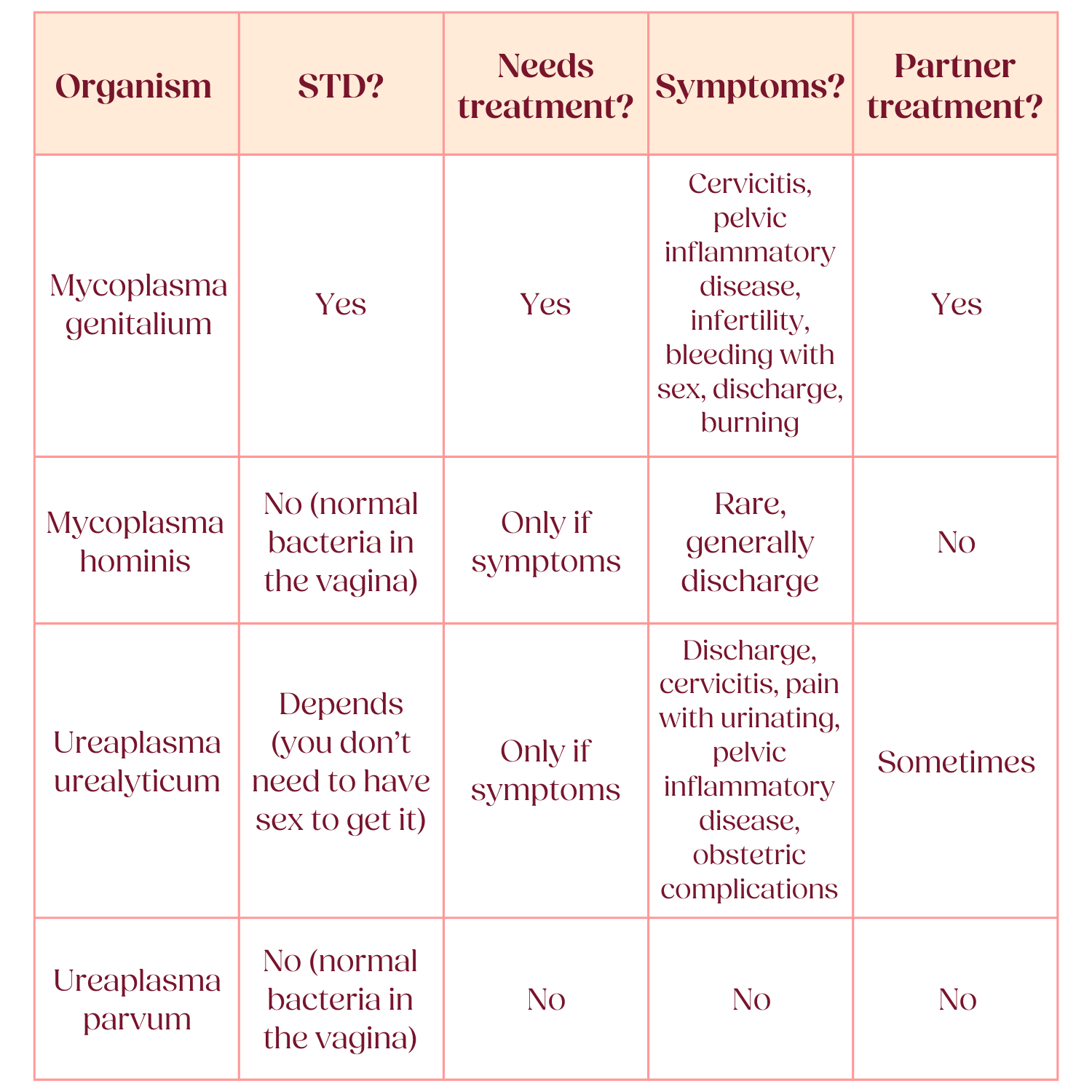
Here's what you really need to know: only one of these is always considered a sexually transmitted infection.
Mycoplasma Genitalium : The True STD
Mycoplasma genitalium is always sexually transmitted. I remember this easily because of its name (genitalium). It's transmitted through genital contact, specifically penetrative intercourse.
If you test positive for mycoplasma genitalium, both you and your partner need treatment.
Now, if you’re already questioning your relationship over this… DON’T PANIC!
Men commonly don't know they have mycoplasma genitalium because they're often completely asymptomatic. It's not part of routine STD screening panels, so your partner could have had it for a while without realizing it.
So yes, this doesn't mean anyone cheated or did anything wrong — it just means you caught something that isn't regularly tested for.
Ureaplasma Urealyticum : Sometimes an STD, Sometimes Not
Now, if we’re talking Ureaplasma… this is where it gets interesting.
Ureaplasma urealyticum is only sometimes considered a sexually transmitted infection.
Why sometimes? Because people who have never had sexual intercourse can test positive for ureaplasma urealyticum.
Let that sink in for a second.
This means ureaplasma urealyticum can be part of your normal genital bacterial environment, meaning it can just live there naturally without being transmitted sexually.
So, When Do We Treat Ureaplasma Urealyticum?
We typically recommend treatment only if you're having symptoms like:
- Unusual vaginal discharge
- Burning or discomfort
- Pain with urination
- Persistent irritation
Mycoplasma Hominis and Ureaplasma Parvum : Usually Not STDs
Mycoplasma hominis and Ureaplasma parvum are generally considered part of the normal vaginal flora. They live in the genital tract of many healthy people without causing any problems.
We typically only treat them if:
- You're having clear symptoms
- Other causes have been ruled out
- You're pregnant (as they can sometimes complicate pregnancy)
For most people testing positive for these, no treatment is needed if you're not having symptoms.
Here’s a handy guide to make it easier for you:
Why This Confusion Happens (And Why Google Makes It Worse)
When you search "mycoplasma positive," Google tends to show results about mycoplasma genitalium — the one that is a true STD.
The algorithms don't distinguish between the different types, so you end up reading scary information that may not even apply to your specific result.
This is why I always tell patients: please call us before you Google. Or at least call us after you Google so we can talk through what you're reading and what actually applies to your situation.
What Symptoms Suggest You Need Treatment?
Whether you test positive for mycoplasma or ureaplasma, we typically recommend treatment if you're experiencing:
- Abnormal vaginal discharge (color, odor, consistency)
- Burning or itching
- Pain during intercourse
- Pelvic discomfort
- Urinary symptoms (burning, frequency, urgency)
- Symptoms that haven't responded to standard BV or yeast treatments
If you test positive but have zero symptoms? In many cases, especially with ureaplasma and mycoplasma hominis, we may not treat it at all.
Should Your Partner Be Tested?
This depends on which organism you have:
Mycoplasma genitalium: Yes, your partner should be tested and treated regardless of symptoms.
Ureaplasma urealyticum: Maybe — depends on your sexual history and symptoms.
Mycoplasma hominis and Ureaplasma parvum: Usually no, unless your partner also has symptoms.
What If You've Never Had Sex?
If you've never had penetrative intercourse and test positive for:
- Ureaplasma or mycoplasma hominis: This is likely part of your normal flora. We only treat it if you're experiencing symptoms.
- Mycoplasma genitalium: This would be unusual and we'd want to discuss your specific situation.
Remember: these organisms can colonize the genital tract naturally in some people. A positive test doesn't automatically mean sexual transmission.
The Bottom Line: Don't Panic Over a Positive Result
Here's what I want you to remember when you get mycoplasma or ureaplasma test results:
- Not all positive results mean you have an STD
- Not all positive results require treatment
- Context matters—your symptoms, sexual history, and which specific organism you have all factor into the treatment plan
- Your partner may or may not need treatment depending on the specific diagnosis
If you test positive for any of these, the most important thing is to have a conversation with your provider. We'll look at your specific situation (your symptoms, your history, which organism tested positive) and come up with a treatment plan that makes sense for you.
And once again… give us a call BEFORE Google makes you think you have some terrible infection.
If you want to learn more about other vaginal conditions, check our series on Lichen Sclerosus here and here.
Have more questions? Book a 15-min FREE virtual consultation with us!
And don't forget to visit our Vaginal clinic page to get quick STD care wherever you are!
.png)




Real Talk, No Filter
Join our newsletter, where we talk about perimenopause, hormones, sexual health, and everything else!